
Every edge has a job to do
Not every bind-off gives the same result. A neckline needs one approach so that it sits well on the body, a cuff needs another so that it stretches enough when you pull it on, and the edge of a shawl needs another so that it drapes naturally when worn. The method you choose therefore matters both for the appearance of the edge and for how the finished knitwear behaves.
How do you choose the right method?
The stretchiest bind-off will not always be the best choice. Sometimes we want a stable, firm edge, and sometimes we need one that stretches freely with the fabric. It is worth thinking about what the edge needs to do and what we expect from the finished project.
Four methods, four results
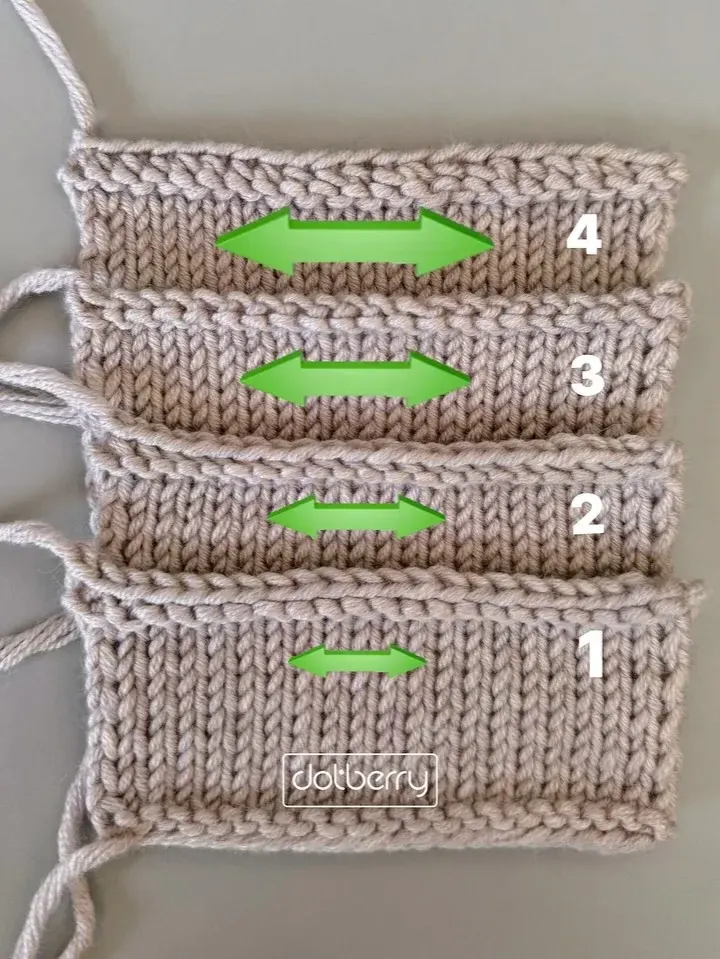
I have put together a comparison of four bind-off methods that I particularly like. Each gives a slightly different result and involves a different way of working.
The comparison includes: 1. The standard bind-off using knitting needles, the simplest and most traditional method. 2. Binding off with a crochet hook. 3. Binding off with a sewing needle. 4. Binding off using knitting needles and yarn overs.
I have arranged them by stretchiness, from the least stretchy to the most stretchy. This is a comparison of these four methods, rather than a universal ranking of all bind-off methods.
Compare them using the same yarn
If you want to explore the differences yourself, make four small swatches using the same yarn and needles. Finish each with a different bind-off. This will help you see how the individual methods affect the finished edge.
See how to do it
On my Instagram, @dotberry_, you will find a carousel of videos where I show all four methods step by step. You can take a closer look at each one and choose the method that works best for your project.